
Blog/News
THC Wax vs Other Concentrates: What’s the Difference?

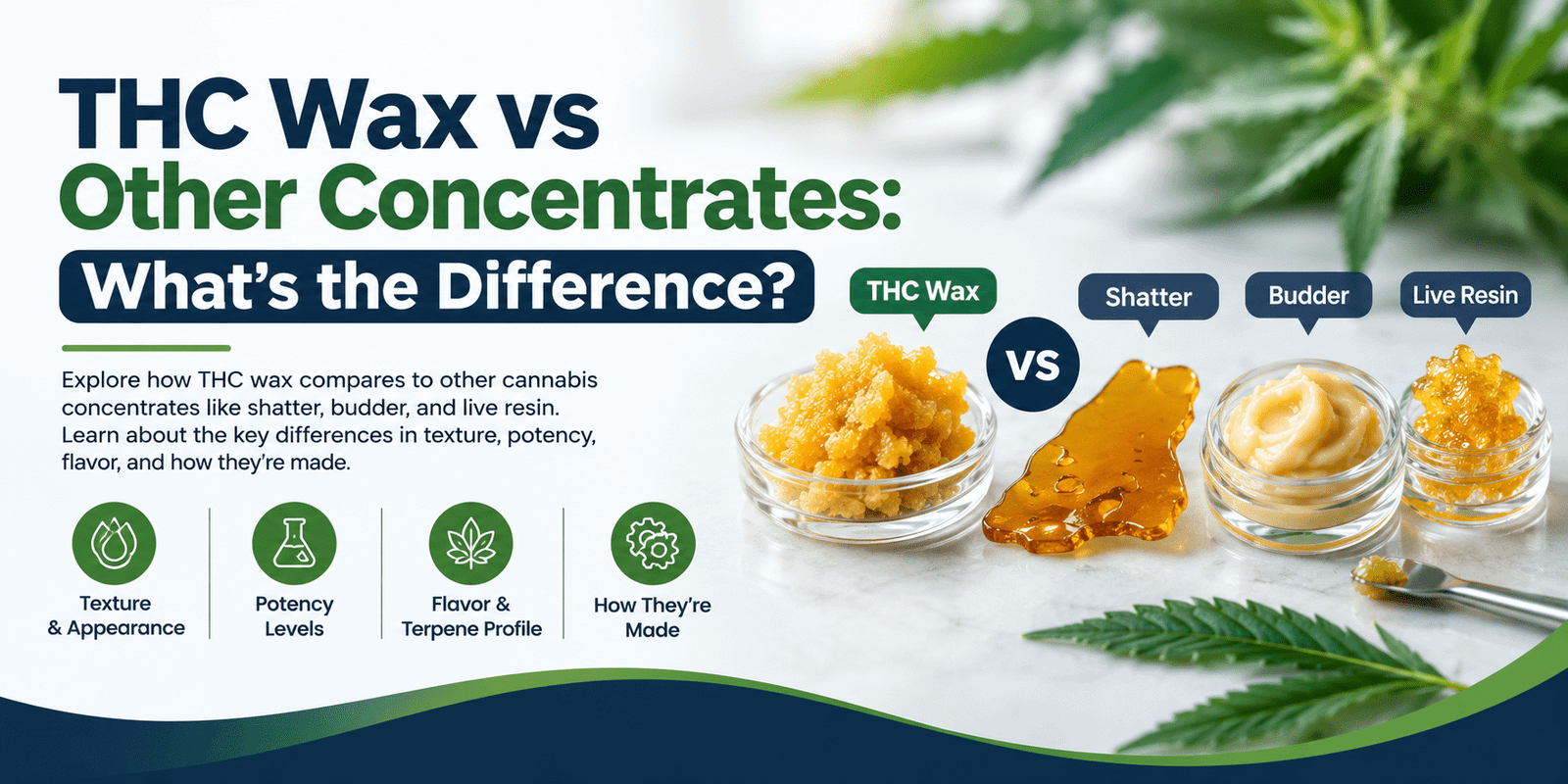
If you have ever compared cannabis concentrates, you have probably seen products described as THC wax, shatter, live resin, rosin, budder, crumble, or hash. Although these products belong to the same broad category of cannabis concentrates, they are not identical.
The biggest differences usually come from how the concentrate is made, its texture, terpene content, cannabinoid profile, starting material, and extraction method. These factors can influence how a concentrate looks, smells, tastes, stores, and is consumed.
So, what exactly makes THC wax different from other concentrates?
THC wax is generally a cannabis concentrate with a soft, opaque, wax-like consistency. Its texture can range from creamy and sticky to crumbly, depending on how it was extracted and processed. Like other concentrates, wax can contain much higher cannabinoid concentrations than traditional cannabis flower.
However, “wax” describes a type of concentrate and texture more than one single standardized recipe. Two products both labeled wax can have noticeably different appearances, potency, terpene profiles, and consistency.
Understanding these differences makes it easier to compare concentrates without assuming that one product is automatically stronger or better than another.
What Is THC Wax?
THC wax is a concentrated cannabis extract with a soft, waxy, sticky, or crumbly texture.
The name comes from its appearance. Depending on the processing technique, wax can resemble soft candle wax, whipped butter, honeycomb, or a crumbly solid.
Why Is It Called Wax?
The term “wax” generally refers to the physical appearance and consistency of the concentrate.
Unlike cannabis flower, which consists of dried plant material, wax is an extract containing concentrated cannabinoids and terpenes.
What Is Usually in THC Wax?
A typical wax product may contain:
- THC and other cannabinoids
- Cannabis-derived terpenes
- Minor cannabinoids
- Concentrated resin compounds
- Small amounts of other naturally occurring cannabis compounds
The exact profile depends on the cannabis strain, starting material, extraction method, refinement process, and storage conditions.
Is All Wax the Same?
No.
One wax product can have a very different cannabinoid and terpene profile from another.
Some waxes are soft and creamy, while others are dry and crumbly. Some have strong terpene aromas, while others have a more subdued smell.
Wax Is a Category, Not a Single Formula
A useful way to think about wax is:
Wax = concentrate category + characteristic texture
It does not necessarily tell you exactly how the concentrate was produced or precisely how potent it is.
How Is THC Wax Different From Cannabis Flower?
The most obvious difference between wax and flower is concentration.
Cannabis flower is the dried, cured plant material people commonly recognize as marijuana. Wax is produced by extracting desired compounds from cannabis plant material and concentrating them into a smaller amount of material.
Flower Contains Plant Material
Cannabis flower contains:
- Cannabinoids
- Terpenes
- Plant matter
- Trichomes
- Moisture
- Other naturally occurring compounds
The cannabinoid concentration is generally lower than that of cannabis concentrates.
Wax Is Highly Concentrated
Concentrates remove much of the plant material while retaining cannabinoids and, depending on the process, terpenes.
As a result, a small quantity of wax can contain a substantial amount of THC.
Why Does Concentration Matter?
Higher cannabinoid concentration can mean a more intense experience, particularly for people who are inexperienced with concentrates.
This is one reason concentrates should not be evaluated simply by asking which product is “strongest.”
Concentrate Potency Can Vary
The label is more useful than the product name alone.
A product labeled “wax” does not automatically have a specific THC percentage. Testing results should be checked to determine the actual cannabinoid content.
THC Wax vs Shatter: What’s the Difference?
Wax and shatter are both cannabis concentrates, but their physical structures are usually different.
Wax is typically soft, opaque, and pliable, while shatter is generally harder, clearer, and glass-like.
What Is Shatter?
Shatter is a cannabis concentrate known for its rigid, brittle texture.
The name comes from the way the concentrate can break or “shatter” when handled.
Wax vs Shatter Texture
The easiest comparison is:
Wax: Soft, sticky, creamy, or crumbly.
Shatter: Hard, brittle, glass-like.
Do Wax and Shatter Have Different Potency?
They can.
Neither “wax” nor “shatter” automatically guarantees a specific THC percentage.
Potency depends on the starting material, extraction process, purification, and final product.
Which Has More Terpenes?
There is no universal rule.
Some wax products can contain substantial terpene levels, while some shatter products may have different terpene profiles depending on how they were processed.
The Main Difference
The biggest distinction is texture and processing, not necessarily potency.
THC Wax vs Live Resin: What’s the Difference?
Live resin is defined primarily by the starting material and preservation of the plant’s fresh characteristics, while wax is primarily a texture-based concentrate category.
What Is Live Resin?
Live resin is generally made using cannabis that is frozen soon after harvest rather than being traditionally dried and cured first.
This approach is intended to preserve more of the plant’s volatile compounds, particularly terpenes.
Why Does Live Resin Often Smell Strong?
Terpenes contribute significantly to cannabis aroma.
Because live resin production is designed to preserve more of these volatile compounds, many live resin products have strong and distinctive aromas.
Can Live Resin Look Like Wax?
Yes.
This is where concentrate terminology can become confusing.
A live resin product may have a soft or saucy consistency, and some concentrates may visually resemble wax.
That does not necessarily mean they are the same type of extract.
Wax vs Live Resin
Think of the distinction this way:
Wax: Primarily describes consistency and appearance.
Live resin: Describes the type of starting material and extraction approach.
Why the Terms Can Overlap
A concentrate can have characteristics associated with both categories.
This means product labels should be evaluated based on the extraction method, starting material, cannabinoid profile, terpene profile, and testing information, rather than appearance alone.
THC Wax vs Rosin: What’s the Difference?
Wax and rosin can differ significantly in how they are produced.
Rosin is generally made through a solventless process that uses heat and pressure to separate resin from cannabis material.
What Is Cannabis Rosin?
Rosin is a cannabis concentrate produced without the use of traditional chemical solvents during extraction.
Heat and pressure help release resin containing cannabinoids and terpenes.
What Makes Rosin Different?
One major distinction is:
Rosin: Solventless extraction.
Many wax products: Commonly produced using solvent-based extraction methods.
The specific production method should always be confirmed from the manufacturer’s information.
What Is Live Rosin?
Live rosin generally starts with fresh-frozen cannabis rather than traditionally dried and cured flower.
It combines the fresh-material concept associated with live extracts with a solventless extraction approach.
Does Rosin Have More THC Than Wax?
Not necessarily.
A concentrate’s THC level depends on the individual product.
A higher THC percentage does not automatically mean a better product, particularly for consumers who are more interested in terpene expression, flavor, or a particular cannabinoid profile.
Wax vs Rosin at a Glance
Wax: Often solvent-extracted; soft or waxy texture.
Rosin: Solventless; texture can range from sticky to creamy or solid.
Live rosin: Solventless extract made from fresh-frozen material.
THC Wax vs Budder: What’s the Difference?
Wax and budder are closely related concentrate types, and the distinction often comes down to texture and processing.
What Is Budder?
Budder is a cannabis concentrate with a soft, creamy consistency that can resemble butter.
Its texture is generally smoother and more whipped than many traditional wax products.
Why Does Budder Have a Creamy Texture?
Processing can introduce air and change the physical structure of the concentrate.
Temperature, agitation, moisture, and processing conditions can influence the final consistency.
Is Budder Stronger Than Wax?
Not automatically.
Budder and wax can have similar or very different THC concentrations depending on the individual product.
The laboratory test result is more useful than the product name when comparing potency.
Wax vs Budder
A simple way to remember the distinction is:
Wax: Waxy, sticky, or crumbly.
Budder: Soft, creamy, and butter-like.
Texture Does Not Equal Potency
A smoother or softer concentrate is not necessarily stronger.
Texture is a physical characteristic, while potency is a chemical measurement.
THC Wax vs Crumble: What’s the Difference?
Crumble is generally drier and more brittle than traditional wax.
The name “crumble” comes from its tendency to break apart easily.
What Is Crumble?
Crumble is a cannabis concentrate processed into a relatively dry, crumbly consistency.
Its appearance can resemble small pieces of honeycomb or dry wax.
Why Is Crumble So Dry?
Processing conditions can remove more moisture and produce a concentrate with a different structure from softer wax.
The result is often easier to break apart but potentially more delicate to handle.
Is Crumble More Potent Than Wax?
Not inherently.
Both wax and crumble can have high THC concentrations, but individual products can vary significantly.
Wax vs Crumble Texture
Wax: Softer and more pliable.
Crumble: Drier and easier to break apart.
Which One Has Better Flavor?
There is no universal answer.
Flavor depends heavily on the terpene profile, cannabis genetics, extraction process, storage, and product quality.
THC Wax vs Hash: What’s the Difference?
Wax and hash are both concentrated cannabis products, but traditional hash is generally produced by collecting and compressing cannabis trichomes rather than creating an extract in the same way as many modern concentrates.
What Is Hash?
Hash, or hashish, is traditionally made by separating resin-rich trichomes from cannabis and compressing the collected material.
The result can range from soft and sticky to firm and dense.
How Is Hash Different From Wax?
The key difference is the production approach.
Hash: Traditionally concentrates trichomes mechanically.
Wax: Commonly produced by extracting cannabinoids and terpenes from cannabis material.
Can Hash Be Very Potent?
Yes.
Hash can contain substantially more cannabinoids than ordinary cannabis flower, although potency varies considerably between products.
What Is Dry-Sift Hash?
Dry sift is produced by mechanically separating trichomes from dried cannabis using screens or other physical separation methods.
It is different from solvent-based extracts.
Hash and Wax Are Not Simply Different Names for the Same Product
Although both are cannabis concentrates, their production methods, textures, cannabinoid profiles, and terpene characteristics can differ.
Which THC Concentrate Has the Highest Potency?
There is no single concentrate type that is always the strongest.
Potency varies by product and batch.
Why Product Testing Matters
The concentrate category tells you something about the product, but laboratory testing provides more useful information about its actual cannabinoid concentration.
Look for information such as:
- Total THC
- Total CBD
- Other cannabinoids
- Terpene concentration
- Batch information
- Testing date
- Manufacturer information
Does Higher THC Mean Better Quality?
No.
Quality can involve much more than THC percentage.
Consumers may also care about:
- Terpene content
- Flavor
- Aroma
- Extraction method
- Starting material
- Purity
- Testing
- Consistency
- Storage
- Overall cannabinoid profile
Why Extremely High THC Can Be Misleading
Two concentrates with similar THC percentages can provide noticeably different experiences because cannabinoids and terpenes interact with the overall product profile.
Potency vs Quality
A useful distinction is:
Potency = concentration of cannabinoids.
Quality = broader characteristics of the product.
A concentrate with slightly less THC can still be preferable to one with a higher THC number if its flavor, terpene profile, testing, and overall characteristics better match the consumer’s preferences.
How Do You Choose Between Wax and Other Concentrates?
Choosing a concentrate should begin with product information and personal tolerance, rather than simply choosing the product with the highest THC percentage.
Consider the Texture
Different concentrate textures can affect storage and handling.
Wax: Soft and pliable.
Shatter: Hard and brittle.
Crumble: Dry and crumbly.
Budder: Creamy and soft.
Rosin: Often sticky, creamy, or semi-solid.
Hash: Can range from soft to firm.
Consider the Extraction Method
Consumers interested in production methods may want to compare:
- Solvent-based extracts
- Solventless extracts
- Fresh-frozen extracts
- Traditionally cured starting material
- Mechanical trichome separation
Consider Terpenes
Terpenes contribute to cannabis aroma and flavor.
If flavor is important, terpene information can be particularly useful.
Consider Laboratory Testing
Choose products with clear, accessible testing information whenever possible.
Testing can help verify:
- Cannabinoid content
- Contaminant screening
- Product identity
- Batch information
Don’t Choose Concentrates by Name Alone
The word “wax,” “shatter,” “rosin,” or “live resin” tells you only part of the story.
The most informative product comparison combines:
Extraction method + starting material + cannabinoid profile + terpene profile + laboratory testing + storage quality.
How Should THC Wax and Concentrates Be Stored?
Proper storage can help preserve the physical and chemical characteristics of cannabis concentrates.
Protect Concentrates From Heat
Excessive heat can change concentrate texture and may contribute to degradation of some compounds.
Limit Exposure to Light
Light can contribute to cannabinoid and terpene degradation over time.
A cool, dark storage environment is generally preferable.
Reduce Air Exposure
Air exposure can contribute to oxidation and changes in aroma and quality.
Keeping concentrates properly sealed can help limit unnecessary exposure.
Keep Concentrates Away From Children and Pets
Cannabis concentrates can contain high concentrations of THC.
They should always be stored securely and out of reach of children and animals.
Storage Can Affect Texture
A concentrate may become:
- Softer when warm.
- Firmer when cool.
- Drier when exposed to air.
- Less aromatic after prolonged exposure to heat or air.
These physical changes do not necessarily mean the product has the same cannabinoid concentration changed in exactly the same way, so laboratory information remains the better guide for potency.
THC Wax vs Other Concentrates: Frequently Asked Questions
Is THC wax the same as concentrate?
Wax is one type of cannabis concentrate. “Concentrate” is the broader category that can include wax, shatter, crumble, budder, live resin, rosin, hash, and other products.
Is wax stronger than flower?
Wax is generally much more concentrated in cannabinoids than ordinary cannabis flower, but the exact potency depends on the individual product.
Is wax stronger than shatter?
Not necessarily. Wax and shatter can have different THC concentrations, so laboratory testing is the best way to compare individual products.
Is wax the same as live resin?
No. Wax generally describes a texture, while live resin refers primarily to an extraction process involving fresh-frozen cannabis.
Is wax the same as rosin?
No. Rosin is a solventless concentrate made using heat and pressure. Wax can be produced using different extraction processes.
Is wax the same as budder?
They are closely related concentrate categories, but budder generally has a softer, creamier consistency.
Is wax the same as crumble?
No. Crumble is generally drier and more brittle, while wax is typically softer and more pliable.
Is hash the same as wax?
No. Traditional hash is generally produced by collecting and compressing trichomes, while many modern wax products are produced through extraction.
Which concentrate has the most THC?
There is no universal winner. Potency varies by product, batch, extraction process, and manufacturer.
Does higher THC mean a better concentrate?
No. THC percentage measures potency, not overall quality. Terpenes, testing, purity, extraction method, and product characteristics can also matter.
Which concentrate has the most flavor?
Products with higher terpene preservation may have more pronounced aroma and flavor, but there is no single concentrate type that always tastes better.
Is live resin better than wax?
“Better” depends on what the consumer values. Live resin may appeal to people interested in terpene-rich profiles and fresh-frozen starting material, while wax may appeal to people who prefer a particular texture.
Is rosin better than wax?
Neither is universally better. Rosin is attractive to consumers interested in solventless extraction, while wax can offer different textures and product characteristics.
Why does wax change texture?
Temperature, processing, storage, terpene content, and exposure to air can all affect concentrate consistency.
How should THC wax be stored?
Keep it sealed, protected from excessive heat and light, and securely away from children and pets. Follow the manufacturer’s storage instructions when available.
Can THC wax expire?
Cannabis concentrates do not necessarily “expire” like fresh food, but cannabinoids, terpenes, aroma, texture, and overall quality can change over time, particularly with poor storage.
Does wax smell like marijuana?
It can. Cannabis concentrates may have strong aromas because they can contain concentrated terpenes and other volatile compounds.
Can different concentrates have different effects?
Yes. Differences in THC concentration, minor cannabinoids, terpenes, product composition, and individual response can influence the overall experience.
Final Answer: THC Wax vs Other Concentrates
THC wax is one type of cannabis concentrate, but it is not the same as every other concentrate.
The biggest differences between wax, shatter, live resin, rosin, budder, crumble, and hash involve texture, extraction method, starting material, terpene preservation, and cannabinoid composition.
A simple comparison looks like this:
| Concentrate | Typical characteristic | Main distinction |
|---|---|---|
| Wax | Soft, waxy, sticky or crumbly | Texture-based concentrate category |
| Shatter | Hard and glass-like | Rigid, brittle consistency |
| Live Resin | Often saucy or sticky | Made from fresh-frozen cannabis |
| Rosin | Sticky, creamy or semi-solid | Solventless extraction |
| Live Rosin | Sticky or creamy | Fresh-frozen starting material + solventless extraction |
| Budder | Soft and creamy | Butter-like consistency |
| Crumble | Dry and crumbly | Drier processing and texture |
| Hash | Soft, sticky or firm | Traditionally concentrated trichomes |
The most important thing to understand is that concentrate names do not automatically determine potency.
A wax product is not necessarily stronger than shatter. Shatter is not necessarily stronger than live resin. Rosin is not automatically more potent than wax.
The actual laboratory test results are much more useful for determining cannabinoid concentration.
The easiest way to compare concentrates
Think about five questions:
1. How was it made?
Extraction method can tell you whether the product is solvent-based, solventless, fresh-frozen, or mechanically separated.
2. What was the starting material?
Fresh-frozen cannabis and traditionally dried and cured cannabis can produce different concentrate characteristics.
3. What is the cannabinoid profile?
Look beyond THC when testing information is available. CBD and minor cannabinoids can also contribute to the overall profile.
4. What is the terpene profile?
Terpenes contribute heavily to aroma and flavor and can help distinguish products with otherwise similar THC levels.
5. Has the product been tested?
Laboratory testing provides more meaningful information about potency and product quality than the concentrate name alone.
Ultimately, THC wax is best understood as a soft, wax-like form of cannabis concentrate rather than a completely separate category of cannabis product. Shatter, live resin, rosin, budder, crumble, and hash can all be concentrates while having very different physical and production characteristics.
For consumers comparing products, the smartest approach is to look beyond the word printed on the package. Consider the extraction method, starting material, cannabinoid content, terpene profile, testing information, storage conditions, and applicable local laws.
Because concentrates can contain substantially higher THC concentrations than cannabis flower, consumers should also pay close attention to product labeling and their own tolerance. Cannabis can cause impairment, and people should not drive or operate machinery while impaired.
In short: wax, shatter, live resin, rosin, budder, crumble, and hash are all concentrates, but they differ primarily in how they are made, what material they start with, how they are processed, and what final texture and chemical profile they produce.
This article is intended for general educational purposes and is not medical or legal advice. Cannabis laws and product regulations vary by jurisdiction.