
Blog/News
How Long Does Marijuana Stay in Your System? THC Detection Times Explained

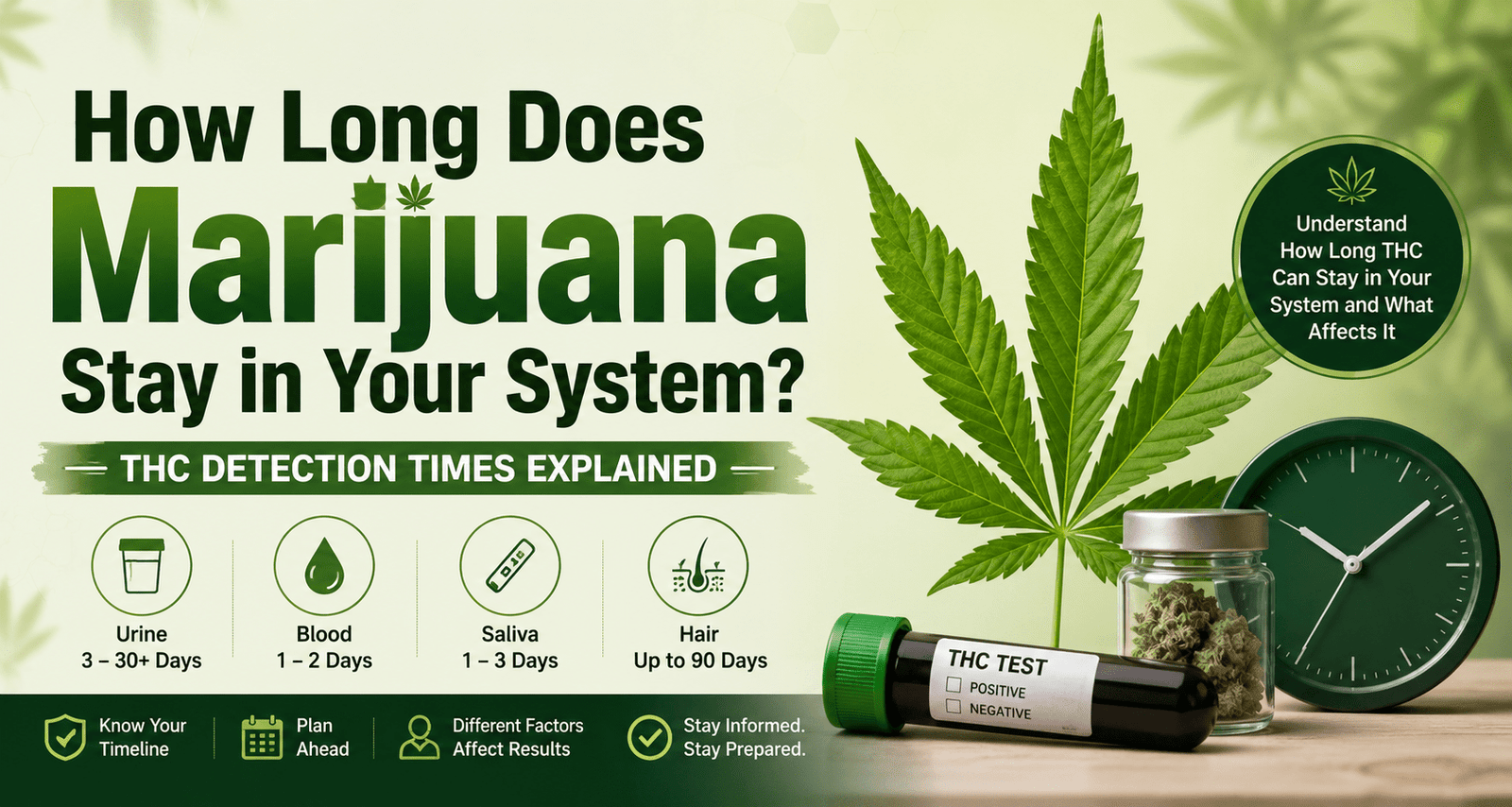
If you are searching “how long does marijuana stay in your system?”, there is no single number that applies to everyone. Cannabis can remain detectable for several days, weeks, or sometimes longer depending on how often marijuana is used, how much THC is consumed, the type of drug test, individual metabolism, and the laboratory’s testing method.
It is also important to understand that how long marijuana can be detected is different from how long you feel its effects. Someone may no longer feel high while a drug test can still detect cannabis metabolites.
How Long Does Marijuana Stay in Your System?
The answer depends largely on the type of test being used.
Quick Marijuana Detection Time Guide
| Drug Test | General Detection Window |
|---|---|
| Urine | Around 3 days after single use; potentially 30+ days with chronic heavy use |
| Blood | Generally hours to around a day for recent use, with longer detection possible in frequent users |
| Saliva | Often around 24 hours, although longer detection is possible |
| Hair | Approximately 90 days or longer depending on the sample |
| Effects | Usually much shorter than the testing window |
These figures are general estimates rather than guarantees. Mayo Clinic Laboratories lists approximate urine detection times ranging from about 3 days after single use to approximately 30 days after chronic heavy use. Individual results can vary.
Why There Is No Exact THC Detection Time
There is no universal expiration date for THC in the body.
Two people can use a similar amount of marijuana and receive different test results several days later. Frequency of use, dose, metabolism, body composition, test sensitivity, and other variables can all influence detection.
The Most Important Difference
Feeling normal does not necessarily mean testing negative.
The effects of marijuana generally disappear much sooner than cannabis metabolites disappear from the body.
How Long Does Marijuana Stay in Urine?
Urine testing is one of the most common ways to test for cannabis.
A standard urine test generally looks for THC-COOH, an inactive metabolite produced when the body breaks down THC. It is not simply measuring whether someone is currently high.
Marijuana Detection in Urine by Usage Pattern
Single Use
After one-time marijuana use, urine may detect cannabis metabolites for approximately several days. Mayo Clinic Laboratories lists an estimated detection time of up to about 3 days for single use.
Occasional Use
People who use marijuana occasionally may continue to have detectable metabolites for several days after consumption.
However, there is no guarantee that an occasional user will test negative after a particular number of days.
Daily Use
Daily marijuana use generally creates a longer detection window.
Mayo Clinic Laboratories gives an approximate 10-day urine detection period for heavy daily use.
Chronic Heavy Use
People who consume cannabis heavily and regularly may remain positive for approximately 30 days or longer.
Some scientific research has documented substantially longer detection periods in certain chronic users.
Why Urine Testing Can Remain Positive After the High
THC is metabolized into compounds that can remain detectable after the intoxicating effects have ended.
This is why a person can feel completely normal while still producing a positive urine result.
How Long Does Marijuana Stay in Blood?
Blood testing generally has a shorter detection window than urine testing.
THC enters the bloodstream relatively quickly after cannabis consumption, particularly when marijuana is inhaled. Blood THC concentrations then decline as the body processes the compound.
What Blood Tests Detect
Blood testing can measure THC and other cannabinoids or metabolites depending on the laboratory’s testing method.
Because active THC declines relatively quickly, blood testing is generally more useful for identifying recent cannabis exposure than urine testing.
Why Blood Detection Is Different From Urine Detection
Urine commonly detects THC metabolites rather than active THC.
Blood testing can instead measure cannabinoids more directly, depending on the test.
Important Point
A blood test and a urine test taken around the same time can produce different results because they examine different biological samples and may target different compounds.
How Long Does Marijuana Stay in Saliva?
Saliva testing, also called oral-fluid testing, generally provides a shorter detection window than urine testing.
THC can enter oral fluid after cannabis consumption, particularly after smoking or vaping because cannabis comes into direct contact with the mouth.
Typical Saliva Detection Window
A saliva test may detect recent cannabis exposure for approximately a day, although research has found that detection can sometimes continue beyond 24 hours.
The actual window depends on the test, the cutoff level, frequency of cannabis use, and other factors.
Why Smoking Can Affect Oral-Fluid Testing
Smoking or vaping cannabis can leave THC directly in the oral cavity.
This can make oral-fluid testing particularly useful for identifying relatively recent exposure.
Saliva Does Not Provide a Perfect Clock
A positive saliva test cannot automatically tell someone exactly when marijuana was consumed.
It indicates that cannabinoids were detected according to the laboratory’s testing criteria.
How Long Does Marijuana Stay in Hair?
Hair testing can provide a much longer historical detection window than urine, blood, or saliva testing.
Cannabis-related compounds can become incorporated into growing hair, allowing laboratories to examine evidence of exposure over a longer period.
How Long Can Hair Testing Detect Marijuana?
A commonly used hair-testing window is approximately 90 days, depending on the length of the hair sample and the laboratory’s testing method.
Some testing methods or longer samples can provide a longer historical window.
What Hair Testing Can and Cannot Tell You
Hair testing is useful for examining longer-term patterns of exposure.
However, it is not especially useful for determining very recent cannabis consumption.
A 90-Day Hair Window Does Not Mean 90 Days of Intoxication
This distinction is critical.
A hair test detecting cannabis-related compounds over approximately 90 days does not mean that active THC remained at intoxicating levels for 90 days.
It means the sample can retain evidence associated with previous exposure.
How Long Does Marijuana Stay in Your System Based on How Often You Use It?
Frequency of use is one of the biggest factors affecting cannabis detection.
A person who consumes marijuana once should not expect the same detection period as someone who consumes it every day.
One-Time Marijuana Use
A single cannabis exposure may produce a relatively short urine detection period, often measured in days rather than weeks.
Mayo Clinic Laboratories lists approximately three days as a general urine detection estimate for single use.
Occasional Marijuana Use
Occasional consumers may have detectable THC metabolites for several days.
However, “occasional” can mean different patterns of use, making it difficult to provide one universal number.
Regular Marijuana Use
Frequent cannabis consumption can extend the detection period because the body may continue processing metabolites from repeated exposure.
Daily Marijuana Use
Daily consumers generally have longer detection windows than occasional consumers.
Urine detection may extend to around 10 days or more depending on the person’s use pattern and testing method.
Chronic Heavy Marijuana Use
Chronic heavy users can potentially remain urine-positive for 30 days or longer.
Why Frequency Matters
Repeated cannabis consumption can result in continued presence of THC metabolites, making detection more prolonged and less predictable.
What Factors Affect How Long THC Stays in Your System?
There are several reasons why marijuana detection times differ between individuals.
Frequency of Use
Someone who uses marijuana once every few months is biologically different from someone who uses it multiple times every day.
Repeated exposure can increase the amount of cannabis metabolites available for detection.
Amount of THC Consumed
The amount of THC consumed can affect the amount of THC and metabolites produced by the body.
A small exposure and a high-dose exposure should not automatically be expected to produce identical testing results.
Cannabis Potency
Cannabis products vary significantly in THC concentration.
Flower, concentrates, edibles, vapes, and other products can deliver different amounts of THC.
Method of Consumption
Smoking, vaping, and eating cannabis produce different absorption and metabolism patterns.
This can influence how quickly THC enters the bloodstream and how long its metabolites remain detectable.
Metabolism
Individual metabolism varies.
Two people consuming similar amounts of cannabis may process THC at different rates.
Body Composition
THC is highly lipid-soluble and can distribute into fatty tissues.
This is one factor that can contribute to differences in how cannabinoids are stored and eliminated.
Drug-Test Cutoff
Drug tests use specific analytical thresholds.
A sample containing a very small amount of a metabolite may be reported differently depending on the test’s cutoff level.
The Test Matters as Much as the Substance
When someone asks “How long does marijuana stay in your system?”, the better question is:
“How long can the specific test being used detect cannabis or its metabolites?”
That distinction produces a much more accurate answer.
Does Drinking Water, Exercising, or Detoxing Remove THC Faster?
Many websites and products claim that marijuana can be rapidly removed from the body through water, exercise, supplements, or detox drinks.
There is no scientifically reliable method that guarantees rapid THC elimination.
Does Drinking Water Flush THC?
No.
Normal hydration is important for health, but drinking excessive amounts of water does not guarantee that THC metabolites will quickly disappear.
Extremely diluted urine can also affect the validity or interpretation of a urine sample.
Does Exercise Remove THC?
Exercise is beneficial for general health, but there is no workout that guarantees rapid elimination of cannabis metabolites.
THC is lipid-soluble, which is one reason cannabis metabolism is more complicated than simply “sweating THC out.”
Do Detox Drinks Work?
Products marketed as marijuana detox drinks or same-day THC cleanses cannot guarantee a negative drug-test result.
Claims such as “pass any marijuana test in 24 hours” should be treated cautiously.
What Actually Determines Detection?
The most important variables include:
- Time since cannabis use
- Frequency of use
- Amount consumed
- Type of test
- Laboratory cutoff
- Individual metabolism
Time is the most important factor that cannot simply be replaced by a detox product.
Does a Positive Marijuana Test Mean You Are High?
No.
A positive marijuana drug test does not automatically mean that a person is currently intoxicated.
Detection Is Different From Impairment
Urine testing commonly identifies THC-COOH, which is an inactive metabolite.
The presence of that metabolite demonstrates previous cannabis exposure but does not necessarily establish:
- The exact time marijuana was consumed
- The amount consumed
- Whether the person is currently high
- Whether the person is currently impaired
Scientific literature has emphasized that urine cannabinoid testing cannot, by itself, determine the precise timing of cannabis use or current impairment.
Why This Distinction Matters
Someone could potentially test positive days after their last marijuana use even though the intoxicating effects ended much earlier.
A Drug Test Is Not an Intoxication Test
This is one of the most important concepts to understand when interpreting cannabis testing.
Positive test ≠ currently high.
Detectable metabolite ≠ current impairment.
How Long Does Marijuana Stay in Your System After Edibles or CBD?
The type of cannabis product can affect how THC is absorbed and processed.
Edibles
Edibles are processed differently from inhaled cannabis.
The onset of effects can take longer, and effects may last longer than those produced by inhaled cannabis.
However, it is not accurate to say that every edible will remain detectable for a specific number of days.
Detection still depends on THC exposure, frequency of use, metabolism, and test type.
CBD Products
CBD, or cannabidiol, is different from THC and is not primarily responsible for the traditional marijuana high.
However, some CBD products may contain THC.
Can CBD Cause a Positive Marijuana Test?
It can, depending on the product and the amount of THC it contains.
A product labeled CBD should not automatically be assumed to be completely free of THC.
Read the Product Label Carefully
People subject to drug testing should understand that cannabinoid products can vary in composition and that product labeling does not necessarily eliminate the possibility of THC exposure.
Marijuana Detection Times: Frequently Asked Questions
How long does marijuana stay in your system after one use?
A urine test may detect cannabis metabolites for several days after one-time use. Mayo Clinic Laboratories lists approximately three days as a general estimate, but individual results vary.
How long does weed stay in urine?
Urine detection can range from several days after occasional use to approximately 30 days or longer in some chronic heavy users.
Can THC stay in your system for 30 days?
Yes. Thirty-day detection is possible, particularly among chronic or heavy cannabis users, although many people will test negative sooner.
Can marijuana stay in your system for 90 days?
Evidence of cannabis exposure can potentially be detected for approximately 90 days through some hair-testing methods. This does not mean active THC remains intoxicating for 90 days.
Does drinking water flush THC out?
No. Drinking water does not guarantee rapid THC elimination or a negative drug test.
Does exercise get THC out of your system?
There is no exercise routine that guarantees rapid THC elimination or a negative drug test.
How long does marijuana stay in saliva?
Saliva testing generally focuses on recent cannabis exposure and often has a shorter detection period than urine, although detection can extend beyond 24 hours in some circumstances.
How long does marijuana stay in blood?
Blood generally has a shorter detection window than urine and is more closely associated with recent exposure.
How long does marijuana stay in hair?
Hair testing can provide evidence of cannabis exposure over approximately 90 days or longer depending on the sample and testing method.
Can a positive marijuana test mean I am no longer high?
Yes. A positive test, particularly a urine test, can reflect previous cannabis exposure rather than current intoxication.
Is there a guaranteed way to pass a marijuana drug test?
No. There is no scientifically reliable method that guarantees a negative result after cannabis consumption.
Final Answer: How Long Does Marijuana Stay in Your System?
Marijuana can remain detectable for several days, weeks, or longer depending on the person’s cannabis use and the type of drug test.
The general pattern is:
- Urine: approximately 3 days after single use and potentially 30+ days with chronic heavy use.
- Blood: generally a shorter detection window focused on recent exposure.
- Saliva: commonly around a day, although longer detection is possible.
- Hair: approximately 90 days or longer depending on the sample.
- Effects: generally last substantially less time than the detection window.
The most important point is that there is no universal number of days that guarantees marijuana is completely undetectable in every person.
Frequency of use, THC dose, product potency, consumption method, metabolism, body composition, test sensitivity, and laboratory cutoff can all influence the result.
And remember:
How long marijuana can be detected is not the same as how long marijuana affects you.
A person may feel completely sober while cannabis metabolites remain detectable.
For medical, employment, legal, or other high-stakes drug-testing questions, consult the healthcare professional, testing provider, employer, or qualified legal professional responsible for the specific situation.
This article is for general educational purposes and is not medical or legal advice.